

Big Picture
Perspective
My end-to-end research system — adapted by context. Sometimes a two-week loop, sometimes a multi-quarter initiative. The structure stays the same; the depth changes.
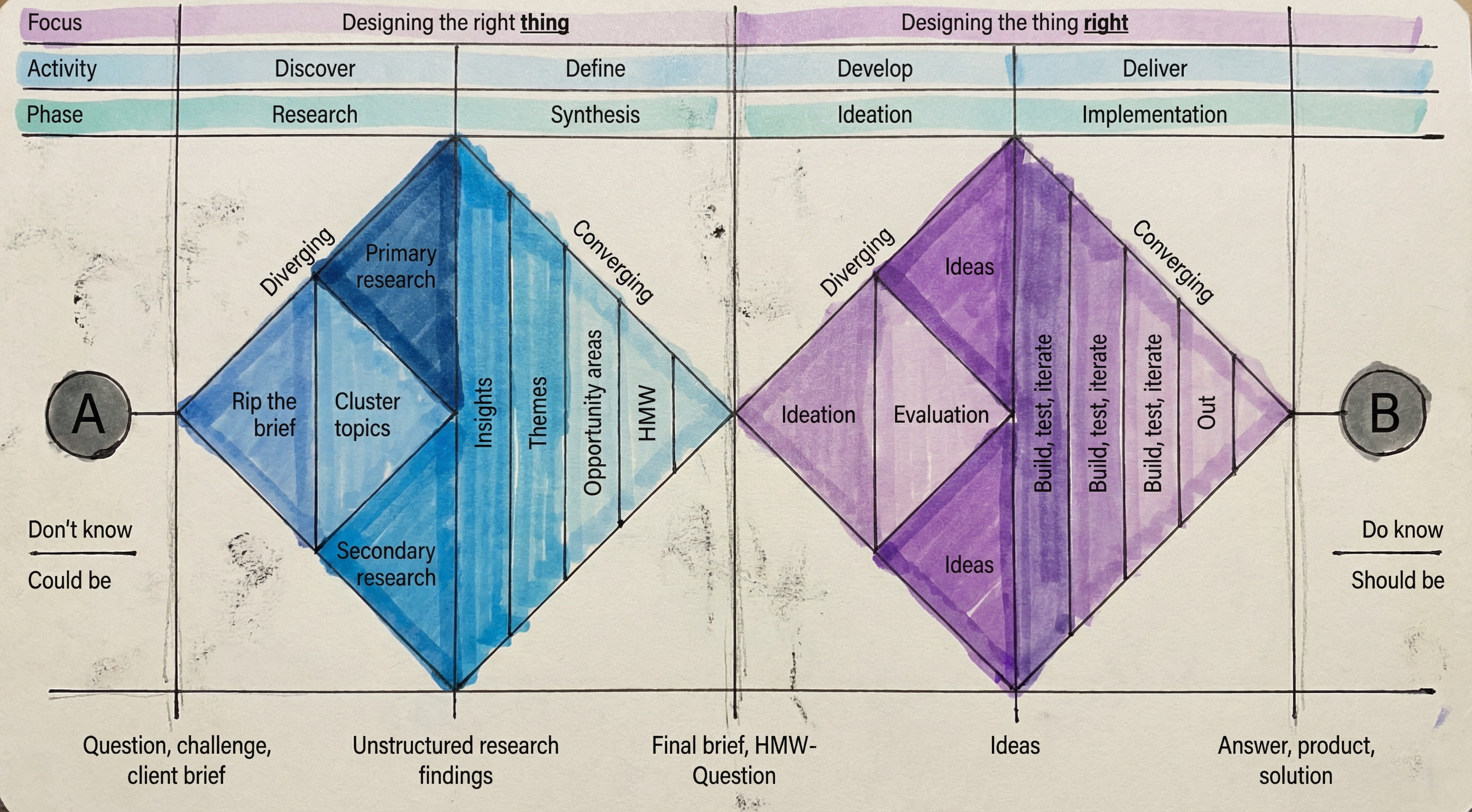
The Double Diamond
The Double Diamond is the structural backbone of how I approach every research engagement — two diverge-converge cycles that prevent jumping to solutions before understanding the problem.
I adapted this framework for my doctoral research and apply it at different depths depending on the project scope, budget, and timeline.
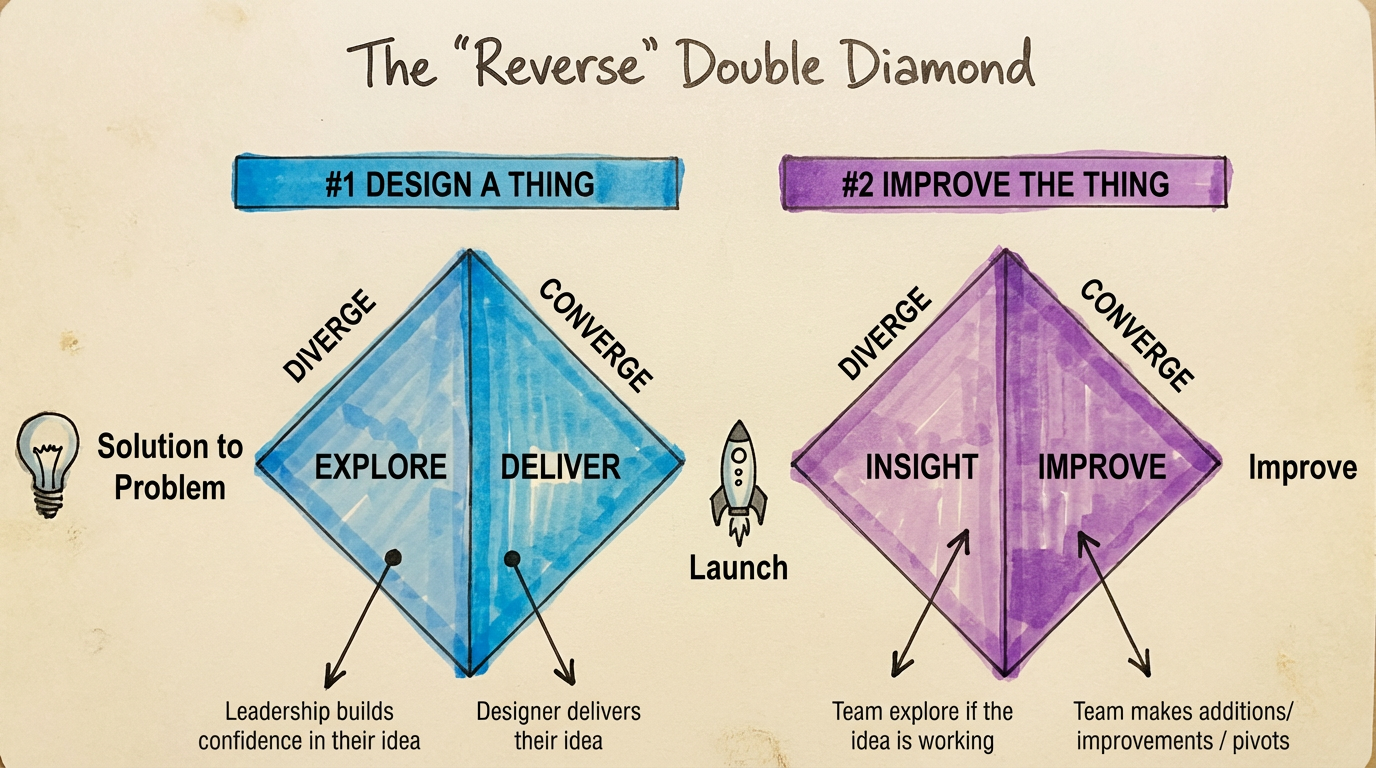
The Reverse Diamond
The Reverse Diamond flips the model — starting from a focused hypothesis and expanding outward before converging on a solution. Ideal for design sprints where time is the constraint.
Research Strategy
I adapt the Double Diamond framework per project scope — the right tools for the right depth, shaped by budget, research questions, and timeline.
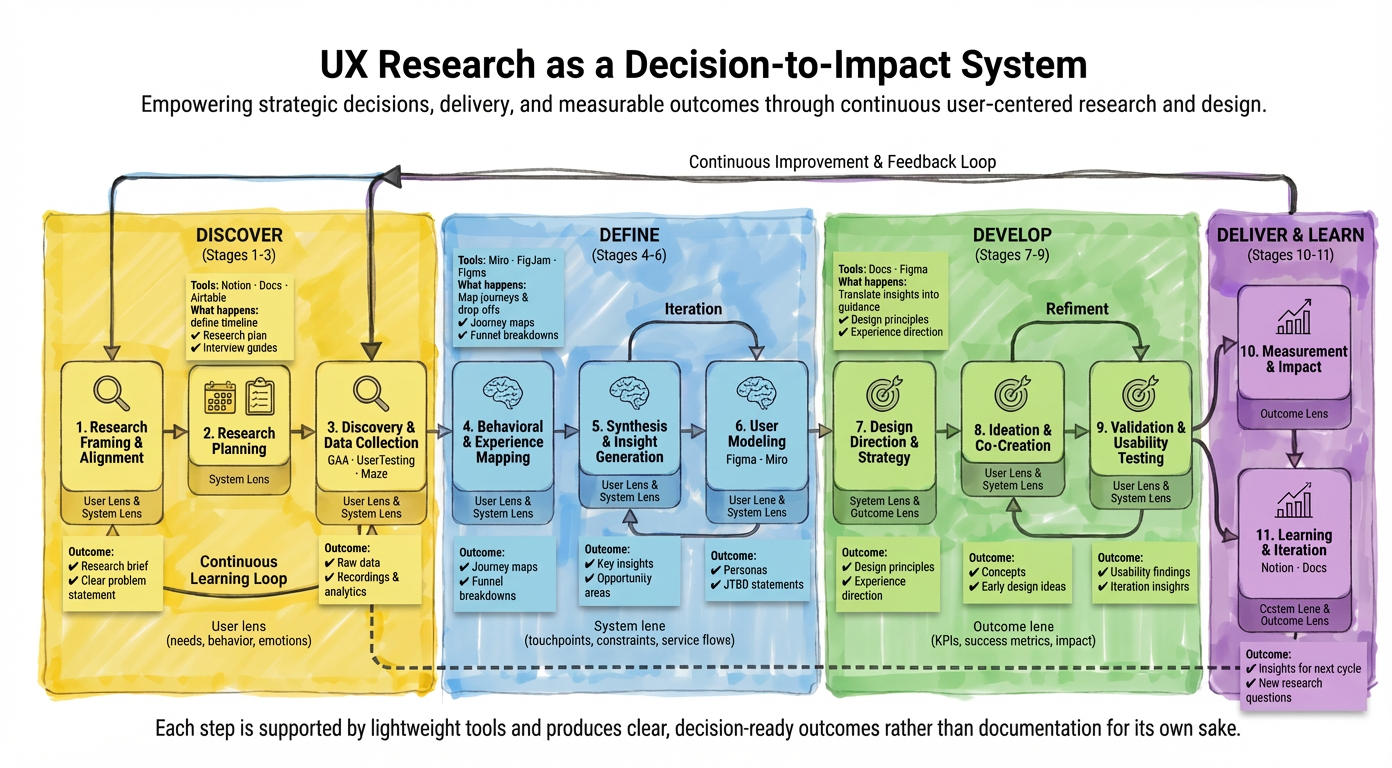
The Double Diamond isn't a rigid process — it's a thinking posture. It reminds me to stay curious longer than feels comfortable, and to commit harder than feels safe.
Every project in this portfolio passed through some version of this framework, adapted to its context, its constraints, and the humans at its centre.